En
En
 De
De 
The moment most projects go wrong
When an IT installation goes live, it can feel like the finish line has been crossed. The systems are live, the hardware is installed, and sign-off is complete. But in reality, this is the point where the real test begins.
The post-installation phase is where systems are proven in the real world, under real pressure, by real users. Without a structured support model in place, even the best deployments can quickly run into performance issues, downtime or user frustration.
Support is not something that should be bolted on afterwards. It needs to be designed into the solution from day one. That is why at Celestra, we believe support is not a feature. It is a mindset.
Why support matters more than the install itself
An installation delivers capability, but support delivers continuity. Once a solution is live, businesses need confidence that their systems will continue to perform reliably every day, not just on the day they are handed over.
Without effective support, businesses increase the risk of downtime, poor user adoption, reduced system performance and missed opportunities for improvement. Issues can take longer to resolve, teams may not have the guidance they need, and small problems can turn into wider operational disruption.
A strong post-implementation support model helps systems stay functional, reduces risk and gives businesses the flexibility to adapt as their needs change. Put simply, you do not just need systems that work on day one. You need systems that keep working every day after that.
The shift from project thinking to lifecycle thinking
One of the biggest challenges is that projects are often planned around delivery, rather than longevity. Installation is treated as a milestone, when it should be seen as one stage in a wider operational lifecycle.
Technology does not stand still once it has been installed. It needs to be monitored, maintained and continually improved. It also needs a fast, reliable response when something goes wrong. This is where support becomes strategic, helping businesses move from reacting to problems to proactively preventing them.
What effective support actually looks like
Effective support is more than a helpdesk or a break-fix service. It is a complete model that gives businesses immediate help when issues arise, access to on-site engineering when remote support is not enough, and proactive maintenance to keep systems stable over time.
It should also include planned lifecycle management, regular servicing, performance checks and clear escalation routes. With the right structure in place, support becomes consistent, visible and dependable. Without it, businesses are left relying on reactive fixes that may not deliver the speed or clarity they need.
Bringing structure to support: the Celestra approach
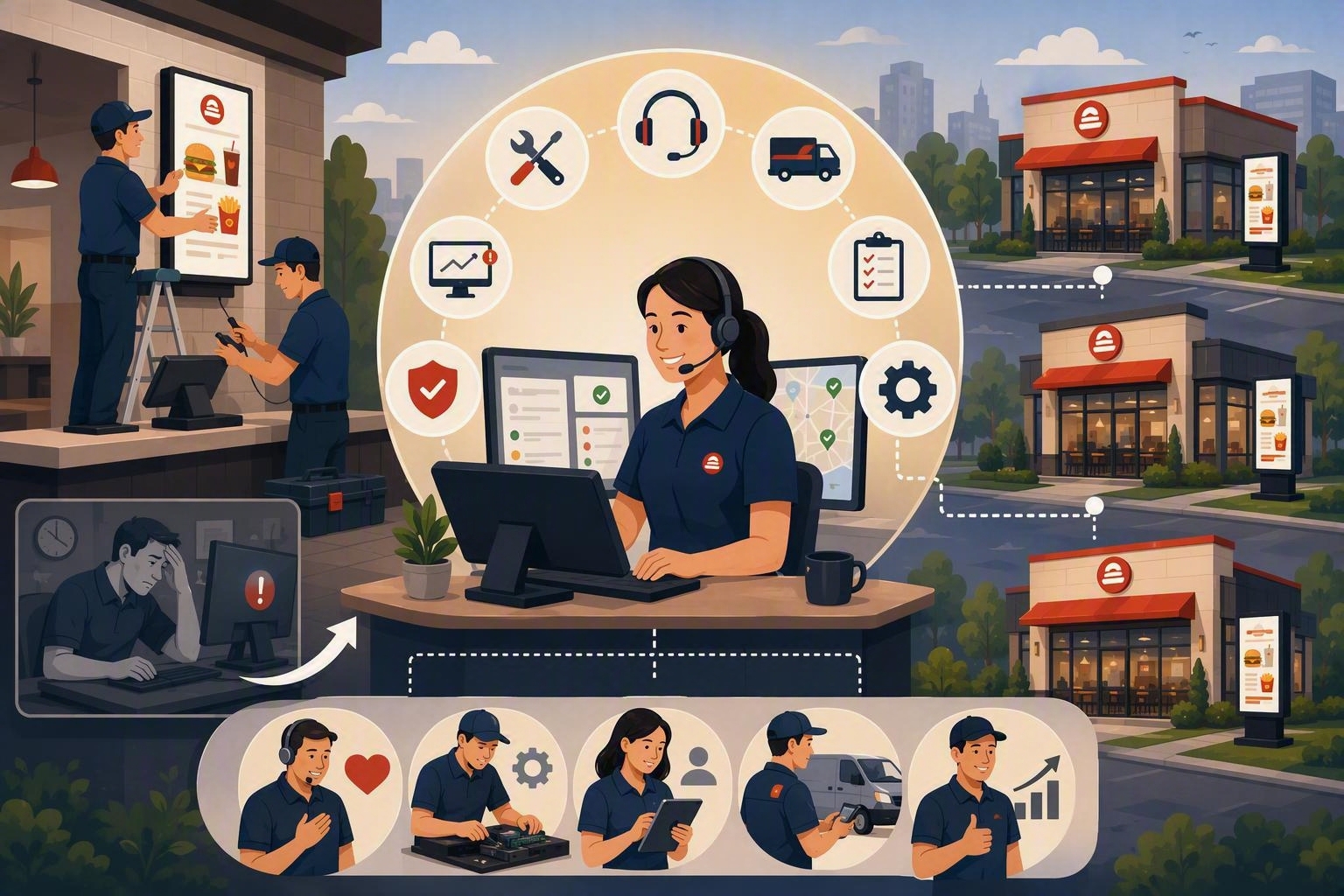
At Celestra, support is designed to cover the entire operational lifecycle, not just the moments when something breaks. Our approach brings together service desk support, field engineering, hardware repairs, planned maintenance, remote monitoring, warranty management, infrastructure support and break-fix services into one managed ecosystem.
This means clients have a clear first point of contact for troubleshooting and diagnostics, as well as access to skilled engineers across the UK and Europe when on-site support is required. It also means equipment can be repaired, maintained and managed more effectively throughout its working life, helping to maximise value and reduce disruption.
By combining proactive monitoring with responsive support, Celestra helps businesses keep critical systems running, reduce the pressure on internal teams and maintain confidence across their technology estate. This is not just support. It is a managed ecosystem designed to keep business moving.
The mindset behind it: The 5Cs
What separates good support from great support is not only what is delivered, but how it is delivered. At Celestra, our support model is underpinned by the 5Cs: Caring, Craftsmanship, Customisation, Comprehensive delivery and a Can-do attitude.
These values shape the way we approach every interaction. Caring means treating every system like it matters, because it does. Craftsmanship brings attention to detail into every fix, installation and service visit. Customisation ensures support is shaped around each client’s environment, while Comprehensive delivery means looking at the full lifecycle rather than isolated issues. A Can-do attitude keeps the focus on solving problems and finding practical ways forward.
Together, these values turn support from a service into an experience. They help build trust, create consistency and ensure clients feel backed long after installation is complete.
Why businesses need to start earlier
The biggest missed opportunity is not thinking about support early enough. Support should be considered during the planning stage, not after installation, so the right service model is aligned with the systems that matter most to the business.
That means defining response times and service levels upfront, making sure documentation and knowledge transfer are in place, and building a clear escalation path before issues arise. Once systems go live, there is no time to build support from scratch.
Final thought: build it, then back it
IT installations often get the attention, but support is what protects the investment. Without it, even the most advanced systems can struggle to deliver long-term value. With it, businesses gain stability, confidence, scalability and a platform for continuous improvement.
So next time you plan an installation, ask a different question. Not just, “Does the solution work?” but “Who is backing it once it does?” Because support is not a feature. It is the mindset that keeps everything running.