En
En
 De
De 
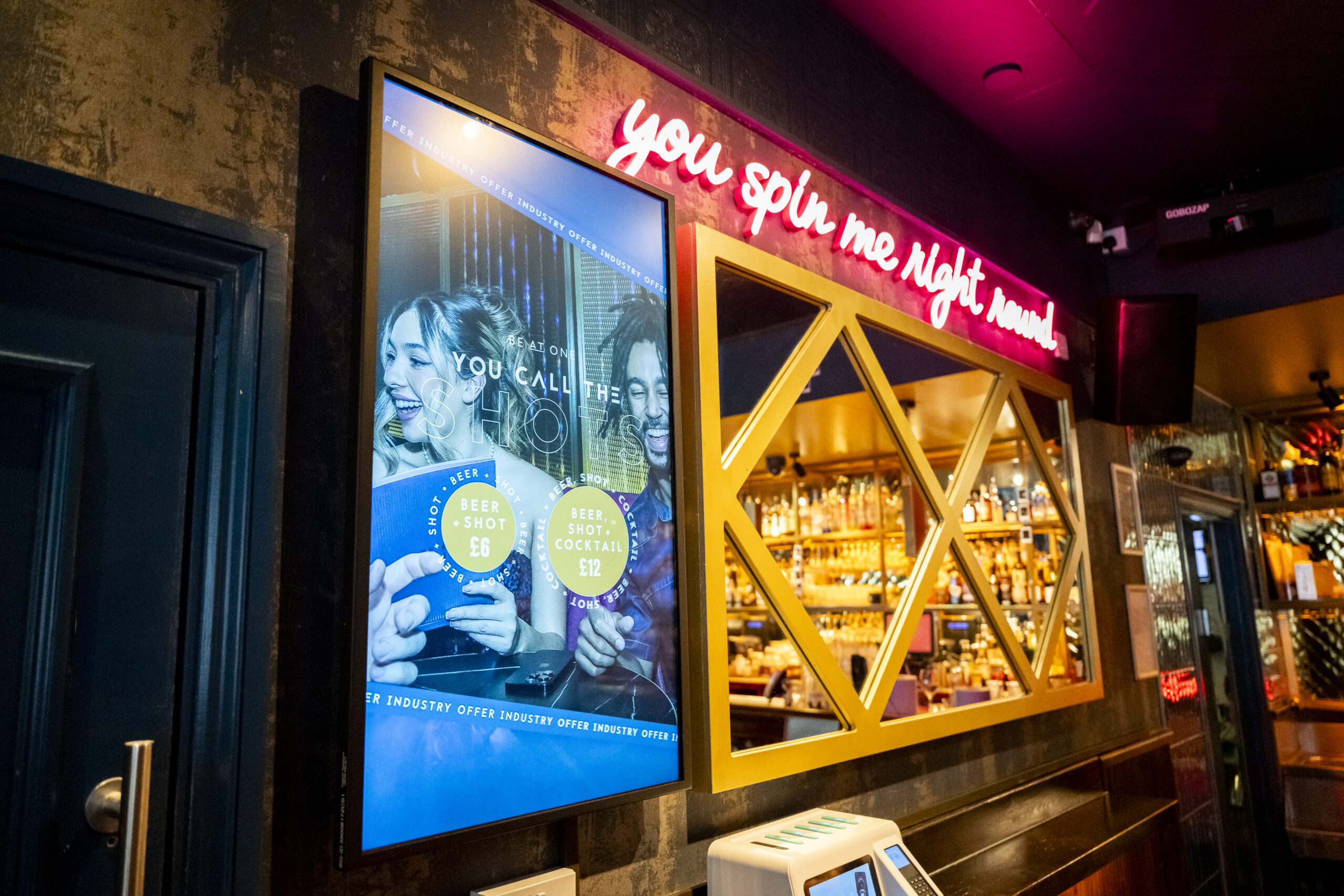
First impressions matter. In commercial environments, display technology now plays a critical role in shaping how customers perceive a brand, navigate a space and engage with content.
From transparent LED displays that transform shopfronts to large-scale LED video walls and centrally managed digital signage networks, today’s display solutions go far beyond the TV screen on a wall. They combine visual impact, architectural sensitivity and intelligent content delivery.
At Celestra, we view display technology as infrastructure. It is part of the building, part of the customer journey and part of the brand experience. Here is how the options compare and how to choose the right solution for your space.
What Is a Transparent LED Display Screen?
A transparent LED display screen is an advanced digital display that allows vibrant visual content to be shown while maintaining visibility and natural light through glass surfaces.
Unlike traditional screens, transparent LED panels integrate seamlessly into windows and façades. This makes them ideal for environments where openness and aesthetics are essential, without sacrificing impact.
Best suited for
- Retail shop windows and façades
- Showrooms and brand experience spaces
- Atriums and premium commercial environments
Installation considerations
Transparent LED displays require specialist planning and installation. Celestra assesses window load limits, sightlines, ambient light conditions, power routing and structural fixing methods. Screens are mounted using discreet support systems, with concealed cabling and full integration into a digital signage platform for centralised content control.
For more insight into window-facing displays, see our guide to Retail Digital Signage Solutions.
What Is an LED Screen?
LED screens use thousands of individual light-emitting diodes to create exceptionally bright, scalable and seamless visuals. Because they are modular, LED screens can be built to almost any size or shape, including curved and architecturally integrated designs.
They are widely used for video walls, outdoor advertising, exhibitions, events and feature installations where visibility is critical.
Key strengths of LED screens
- High brightness for indoor and outdoor environments
- Seamless visuals with no visible bezels
- Scalable to large or custom formats
- Suitable for curved or architectural installations
Installation considerations
LED screen installations require detailed structural and technical planning. This includes frame fabrication, modular panel mounting, ventilation, power distribution, signal processing and pixel pitch selection. Celestra ensures every LED screen is installed for optimal viewing distance, colour accuracy and long-term reliability.
Learn more about our approach to complex installations on our Technology Rollout and Installation Services page.
What Is Digital Signage?
Digital signage refers to the software and systems that manage what content is displayed, where it appears and when it updates. It can operate across LCD screens, LED displays or a combination of both.
Digital signage is particularly effective in environments where information changes frequently, such as menus, promotions, wayfinding, transport updates or internal communications.
LCD screens remain popular indoors due to their affordability and high resolution at close viewing distances. However, they are less effective in bright sunlight or window-facing locations, where LED technology performs better.
Common digital signage applications
- Retail menus and promotional displays
- Corporate communications and dashboards
- Wayfinding and information boards
- Multi-site content networks
Installation considerations
Celestra installs digital signage systems with scalability and resilience in mind. This includes secure screen mounting, network connectivity, CMS configuration, remote management and content scheduling workflows. Everything is designed for central control and minimal operational disruption. Explore how we support multi-site environments with Managed IT and 24/7 Support.
LED Screens vs LCD Displays
Understanding the difference
The main difference between LEDs and LCDs is how they produce light. LED screens use self-emitting diodes, offering high brightness, seamless modular designs, long-distance visibility, 24/7 durability, and scalability, making them ideal for outdoor or window-facing locations, though with a higher upfront cost. LCD screens rely on a backlight passing through liquid crystals, providing sharp clarity at close range, simpler installation, lower cost, and fixed sizes, making them well-suited for indoor environments like menus, kiosks, and office displays.
Choosing the Right Option for Your Brand
When digital signage is the right fit
Digital signage is ideal if you need to update content regularly across one or multiple locations. It works well for menus, schedules, promotions, wayfinding and internal communications, particularly in hospitality, retail, transport and office environments.
When LED screens make more sense
LED screens are the best option when scale, brightness and visual impact matter. They are ideal for attracting footfall, delivering bold brand statements or creating immersive environments at events and exhibitions.
Combining both for maximum impact
Many organisations combine LED screens with a digital signage content management system. This delivers high-impact visuals with intelligent, real-time content control. Campaigns can adapt to the time of day, weather, promotions or location-specific messaging. This hybrid approach offers both visual power and operational flexibility.
How Celestra Installs Display Solutions
Celestra provides end-to-end delivery, from initial consultation to long-term support. Our installation process includes:
- Site surveys and environmental assessments
- Structural and mounting design
- Power and network planning
- Screen mounting and modular assembly
- Content system configuration
- Calibration, testing and optimisation
- Training, monitoring and 24/7 support
Every installation is designed to scale, evolve and deliver measurable business value.
Final Thoughts
Choosing between transparent LED displays, LED screens and digital signage depends on your objectives, environment and desired customer experience. Whether your priority is visibility, flexibility, cost efficiency or premium brand presence, there is a solution that fits. If you are looking for expert guidance, precision installation and long-term support, we are ready to help. Contact us here.