En
En
 De
De 
Restaurant technology has never been more critical. From EPoS and payments to kitchen systems, networking, and digital ordering, technology underpins every service moment. Yet while operators invest heavily in new systems, far less attention is often given to how those systems are installed.
That is a costly oversight!
The challenge is not choosing the right technology. It is ensuring it is deployed in live trading environments without disruption, inconsistency, or risk. This is where experienced restaurant technology installation makes a measurable difference.
This guide covers what decision-makers need to understand before committing to an installation programme, based on real-world hospitality and retail deployments.
What restaurant technology installation actually involves
Restaurant technology installation goes far beyond hardware setup.
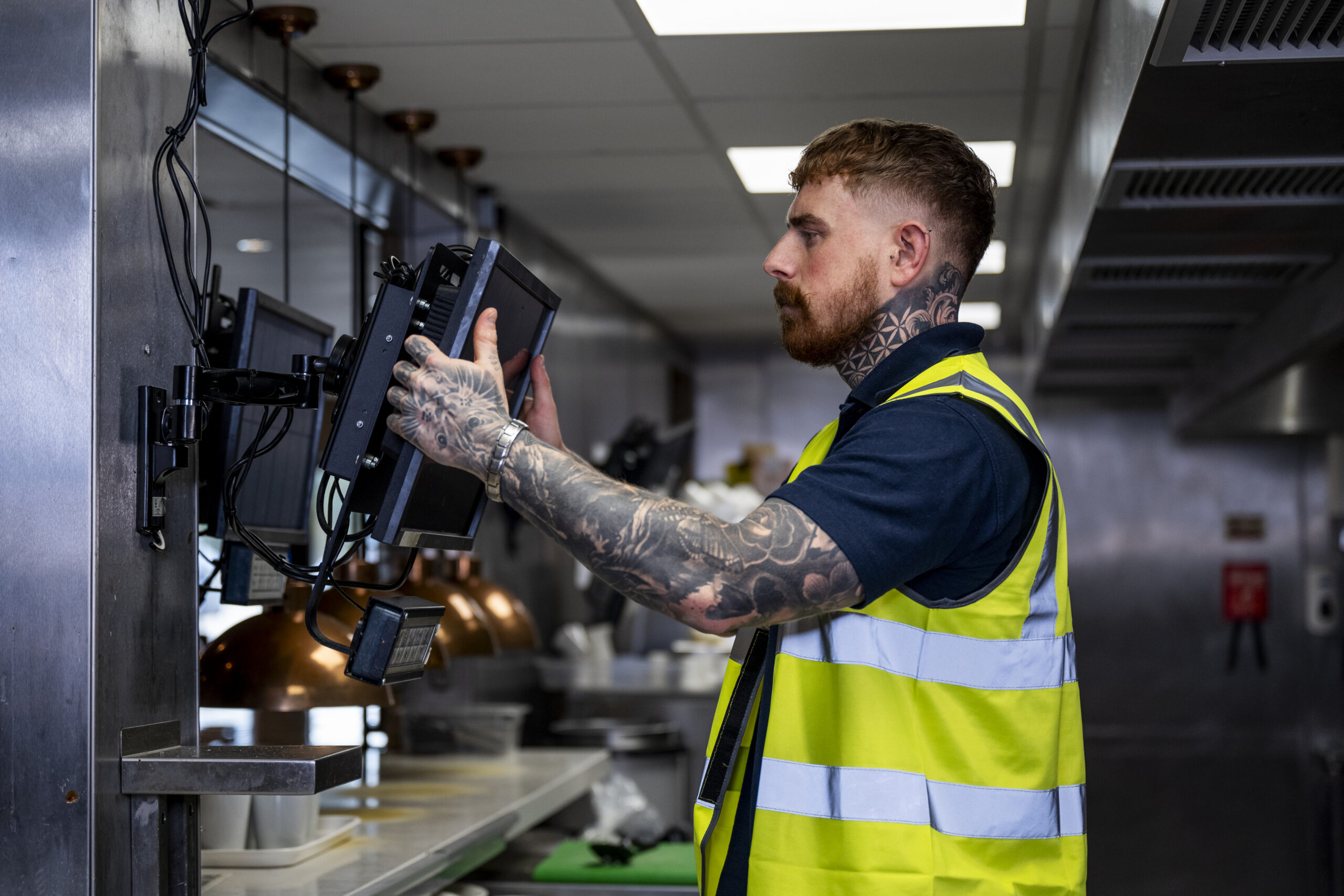
A typical installation programme includes EPoS terminals, servers, networking, payment devices, kitchen display systems, peripherals, cabling, configuration, and integration with existing platforms. In many cases, it also involves working around trading hours, overnight installs, and coordination with construction or refurbishment schedules.
The most effective installations treat technology as part of the operation, not an IT bolt-on. Systems must work together, align with workflows, and perform reliably during peak service, not just pass a power-on test.
Why installation quality matters more than ever
Modern hospitality environments leave little room for error.
High transaction volumes, fewer staff, and rising customer expectations mean technology failures are immediately visible. Poor installation often shows up as slow performance, unreliable payments, or inconsistent behaviour between sites.
For leadership teams, this creates operational risk, reputational damage, and unplanned cost. For guests, it creates friction at the worst possible moment.
A professional installation reduces these risks by ensuring systems are stable, consistent, and ready for real-world conditions from day one.
Benefits leaders actually see
When restaurant technology is installed correctly, the benefits are tangible.
- Faster, more reliable service – Well-installed systems perform consistently under pressure, supporting smooth service during peak periods.
- Reduced disruption – Careful planning and execution minimise downtime, failed installs, and post-launch firefighting.
- Consistency across sites – Standardised installations ensure every location operates the same way, simplifying training, support, and reporting. For senior teams, this translates into predictable performance, clearer oversight, and fewer operational surprises.
Typical installation costs and considerations
Installation costs vary depending on estate size, system complexity, and trading constraints, but the same patterns appear repeatedly.
Single sites and refurbishments
Budgets usually cover hardware installation, cabling, configuration, integration, testing, and early-life support. These projects often run alongside refits or reopenings where timing is critical.
Multi-site and national rollouts
At scale, planning becomes the biggest cost variable. Site readiness surveys, logistics, staging, standardisation, and long-term support models all need to be defined early. The most expensive installation programmes are rarely the largest. They are the ones where operational realities were not addressed upfront.
Timelines: from pilot to rollout
Successful installation programmes follow a structured path:
- Proof of concept – Used to validate technical compatibility and site conditions. Often delivered in weeks if the infrastructure is ready.
- Pilot phase – Typically five to ten sites, allowing teams to test install processes, timings, and site-specific challenges. This phase usually runs over eight to twelve weeks.
- Estate rollout – Once standards are locked down, rollouts can progress quickly with phased installations supported by logistics and 24/7 service coverage. Rushing past the pilot phase is one of the most common causes of rollout issues later.
Real-world experience across hospitality and retail
Celestra delivers restaurant technology installation for some of the UK’s most recognisable hospitality and retail brands.
Our work spans EPoS, networking, payments, kiosks, and digital systems for clients including McDonald’s, Costa, Marston’s, Moto, and Starbucks. These programmes range from single-site upgrades to complex, nationwide deployments delivered around live trading.
Each project requires coordination across IT, operations, construction, and suppliers to ensure technology lands smoothly and performs as expected.
Common installation mistakes to avoid
Even proven technology can struggle if installation fundamentals are missed.
- Infrastructure assumptions – Insufficient power, poor cabling, or weak networks cause more issues than software ever will.
- Live trading disruption – Inadequate planning around trading hours leads to delays, overruns, and frustrated site teams.
- Lack of ownership – Without a clear delivery partner accountable for end-to-end installation, issues fall between suppliers. Avoiding these mistakes is less about technology choice and more about experience.
What to do next
If you are planning a technology upgrade or rollout, the smartest first step is understanding what the installation will really involve for your estate.
We can offer a planning call to discuss feasibility, timelines, risks, and the delivery approach for your specific sites. We also provide an internal readiness checklist to help teams prepare before committing to a budget. A short conversation now can prevent long nights later. Please reach out here
Frequently Asked Questions
How long does a typical restaurant technology installation take?
Timelines vary by scope and site readiness, but most single-site installs are completed within agreed trading windows, often overnight.
Can installations be completed outside trading hours?
Yes. Experienced teams plan installs around live operations to minimise disruption.
Do you support multi-site and national rollouts?
Yes. Structured rollout programmes are designed to deliver consistency, speed, and predictable outcomes at scale.
What causes most installation delays?
Infrastructure issues, unclear ownership, and late changes are the most common causes. Early planning avoids these risks.