 En
En
 De
De 
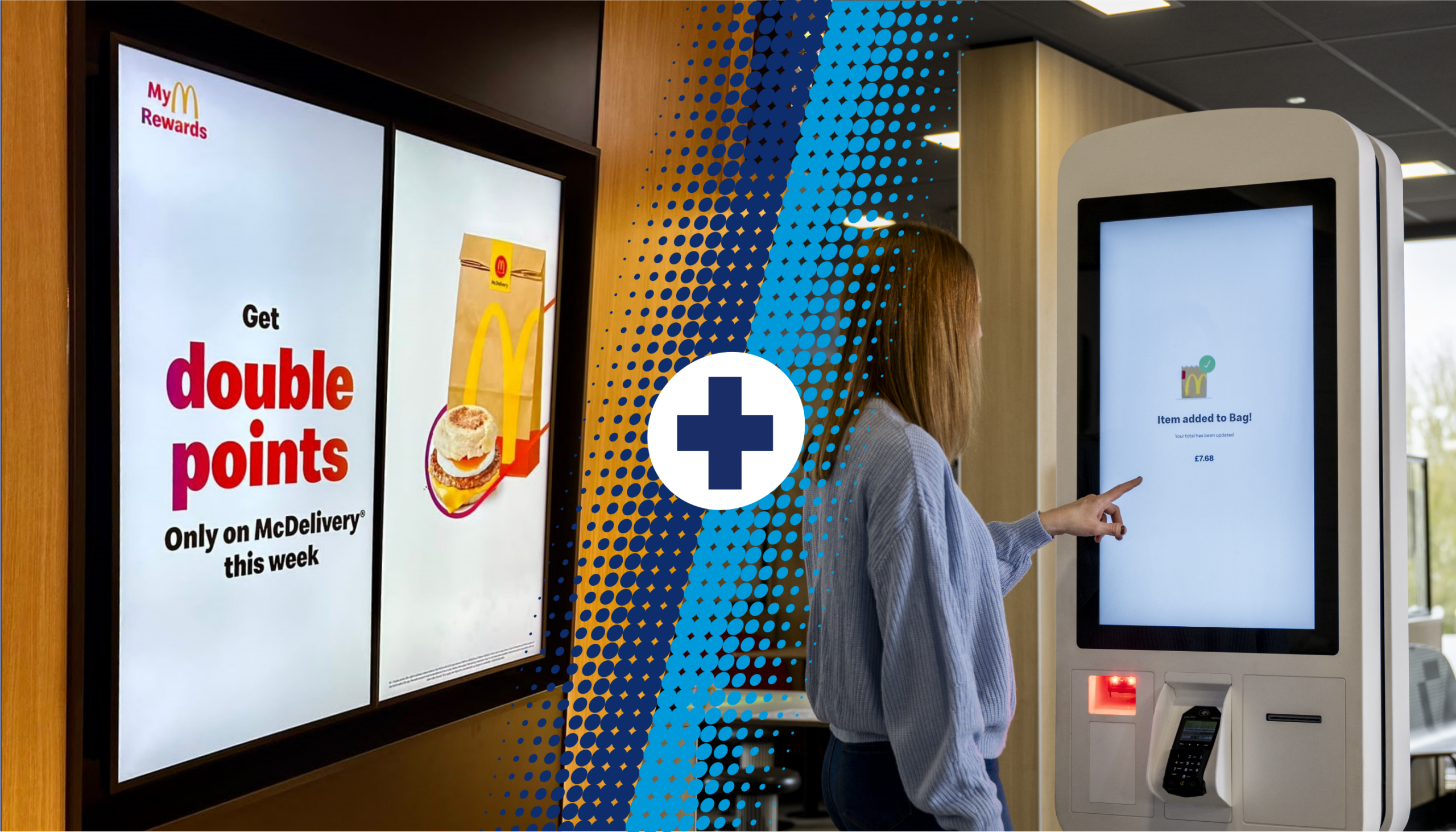
Individually, kiosks and digital media are powerful. Together, they are transformational.
Across hospitality and retail, the most successful brands are no longer thinking in terms of standalone screens or single technologies. They are designing connected digital ecosystems where kiosks, digital menu boards, promotional media, and operational systems work as one. The result is faster service, stronger brand control, and a customer journey that feels seamless rather than stitched together.
This guide explains how kiosks and digital media complement each other, where organisations go wrong, and how to build a connected experience that scales.
The shift from individual screens to connected systems
Early digital deployments often focused on solving one problem at a time. Reduce queues with kiosks. Replace static menus with digital boards. Promote offers with screens.
The next stage of maturity is integration. When kiosks, digital menu boards, and back-of-house systems are connected, content, pricing, availability, and promotions stay aligned automatically. Customers see the same information on every touchpoint, and teams avoid manual updates, workarounds, and inconsistencies.
This is not about adding more screens. It is about making existing screens work harder.
How kiosks and digital media support each other
When designed together, kiosks and digital media reinforce behaviour and improve outcomes.
- Clear menus drive kiosk adoption – Digital menu boards help customers pre-decide before they reach a kiosk, speeding up ordering and reducing congestion during peak periods.
- Aligned pricing and promotions – Promotions displayed on digital media can be mirrored instantly on kiosks, ensuring customers see the same offers regardless of how they order.
- Reduced staff intervention – When customers understand the offer visually before ordering, staff spend less time explaining menus and more time supporting service flow.
The experience feels intentional, not fragmented.
Operational benefits leaders can measure
Connected digital ecosystems deliver value well beyond the front of house.
- Faster throughput at peak times – Pre-decision through digital media combined with self-service ordering reduces dwell time and queue length.
- Stronger brand governance – Centralised control ensures pricing, allergens, promotions, and compliance messaging are consistent across every channel.
- Better data and insight – Connected systems provide clearer insight into customer behaviour, promotional performance, and order trends across the estate.
For leadership teams, this translates into better performance with fewer operational surprises.
What a connected rollout actually involves
Connecting kiosks and digital media is as much about planning as it is about technology.
- Infrastructure alignment – Power, network capacity, and physical placement must be designed holistically, not screen by screen.
- Content strategy – Clear rules define what lives on menu boards, what belongs on kiosks, and how promotions move between channels.
- Integration and ownership – Pricing engines, POS, content management, and operational teams must be aligned from the start.
The most successful programmes treat digital as an operational system, not a marketing afterthought.
Timelines: doing it once, properly
A connected approach does not slow delivery. In fact, it usually prevents rework.
- Discovery and design – Joint workshops define layouts, content rules, and technical dependencies. This stage sets the foundation and typically runs for a few weeks.
- Pilot deployment – A small number of sites validate customer behaviour, operational impact, and content effectiveness across kiosks and media together.
- Scaled rollout – With standards agreed, installations can be delivered efficiently with pre-configured hardware, centralised content, and coordinated support.
Doing it once, properly, is almost always faster than fixing it later.
Real-world experience from hospitality and retail
Celestra specialises in delivering connected digital ecosystems, not isolated technologies. Our work across brands such as McDonald’s, Costa, Moto, and Starbucks brings kiosks, digital menu boards, promotional screens, and operational systems together into a single, scalable model. Each deployment is designed to support both customer experience and day-to-day operations.
You can explore these integrated programmes within our case studies and portfolio here
Common mistakes when connecting kiosks and digital media
Even experienced teams can stumble when systems are treated in silos.
- Designing screens independently – When kiosks and media are designed separately, inconsistencies creep in and customer flow suffers.
- Ignoring content governance – Without clear ownership, content becomes fragmented and operationally risky.
- Underestimating support requirements – Connected systems require monitoring, updates, and support across the entire estate, not just at install.
Avoiding these mistakes is the difference between a connected experience and a collection of screens.
What to do next
If you are planning kiosks, digital media, or both, the smartest approach is to design them together.
Celestra offers a free 30-minute planning call to help organisations map a connected digital strategy, covering feasibility, costs, timelines, and risks. We also provide a combined rollout checklist to support internal planning and stakeholder alignment.
A short conversation now can unlock long-term operational confidence.
Frequently Asked Questions
Do kiosks and digital media need to be rolled out at the same time?
Not always, but planning them together avoids rework and ensures future compatibility.
Can existing digital screens be integrated with kiosks later?
Yes, provided infrastructure, software, and content platforms are compatible.
Who should own connected digital systems internally?
Successful programmes typically involve shared ownership across IT, operations, and marketing, with clear governance.
What is the biggest risk in connected digital projects?
Siloed decision-making. Early collaboration and experienced delivery partners mitigate this risk.
